Brain Health Prize 2026

NextGen Day 2026

NextGen Day 2026 brought together student innovators, researchers, and leaders to explore what it means to build a brain-healthy campus. The event featured a student poster showcase highlighting creative student ideas to strengthen well-being, resilience, and performance in university life.

It also marked the first-ever announcement of the Brain Health Prize, celebrating standout student solutions while creating a platform for the next generation to engage with brain health innovation.

See press release!

WINNERS ↓

2026 Brain Health Prize Winners
ALT TEXT

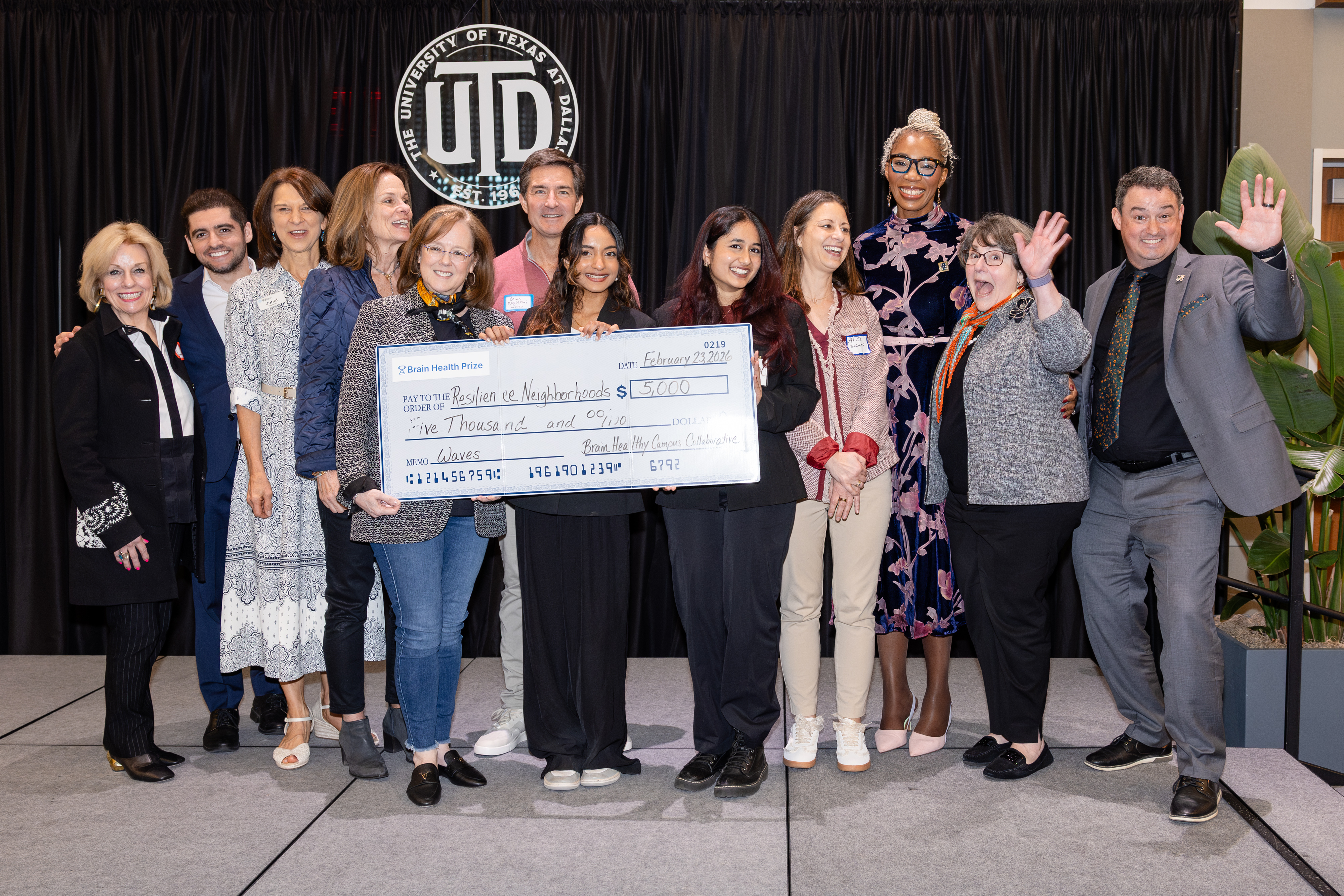
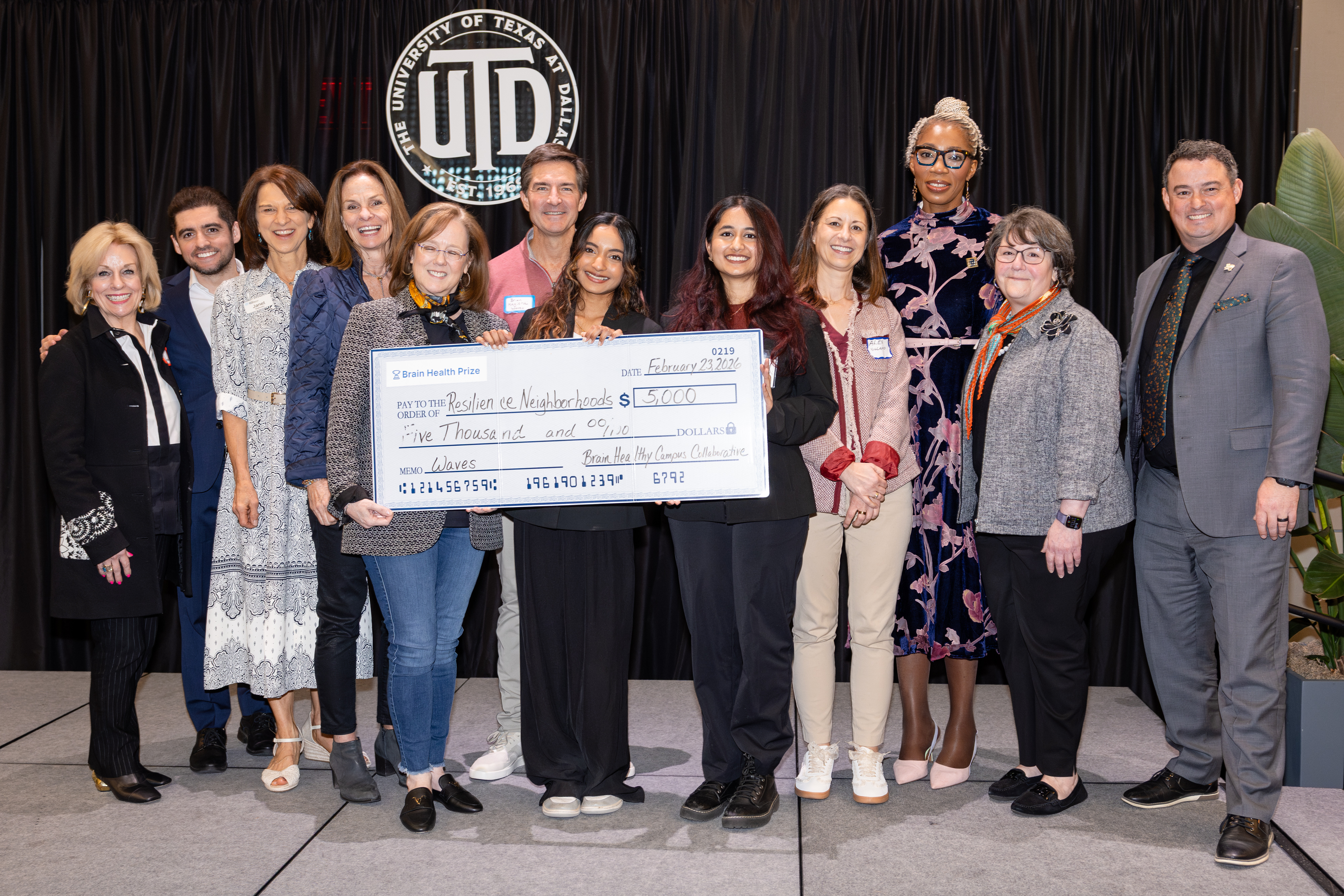
Shreeyalaxhmee Rao and Riya Acharya with Resilience Neighborhoods

Resilience Neighborhoods creates a unified, campus-wide system to build stress resilience at UT Dallas through both in-person and digital connection. This two-person team proposes a BrainHealthy Advocates Program that will train student ambassadors to deliver brief, evidence-based stress-mindset interventions across orientations, clubs, and classrooms, reframing stress as a tool for growth and connection. Complementing this effort, they propose partnering with the xponetiq app to build a “Resilience Neighborhoods” feature that creates a gamified digital community where students earn rewards for healthy habits and social engagement. Together, these initiatives create a scalable, peer-led model that strengthens connection, shifts campus stress culture, and embeds resilience into everyday student life.
Watch the video here!

Runners-Up ↓

2026 Brain Health Prize Runners-Up

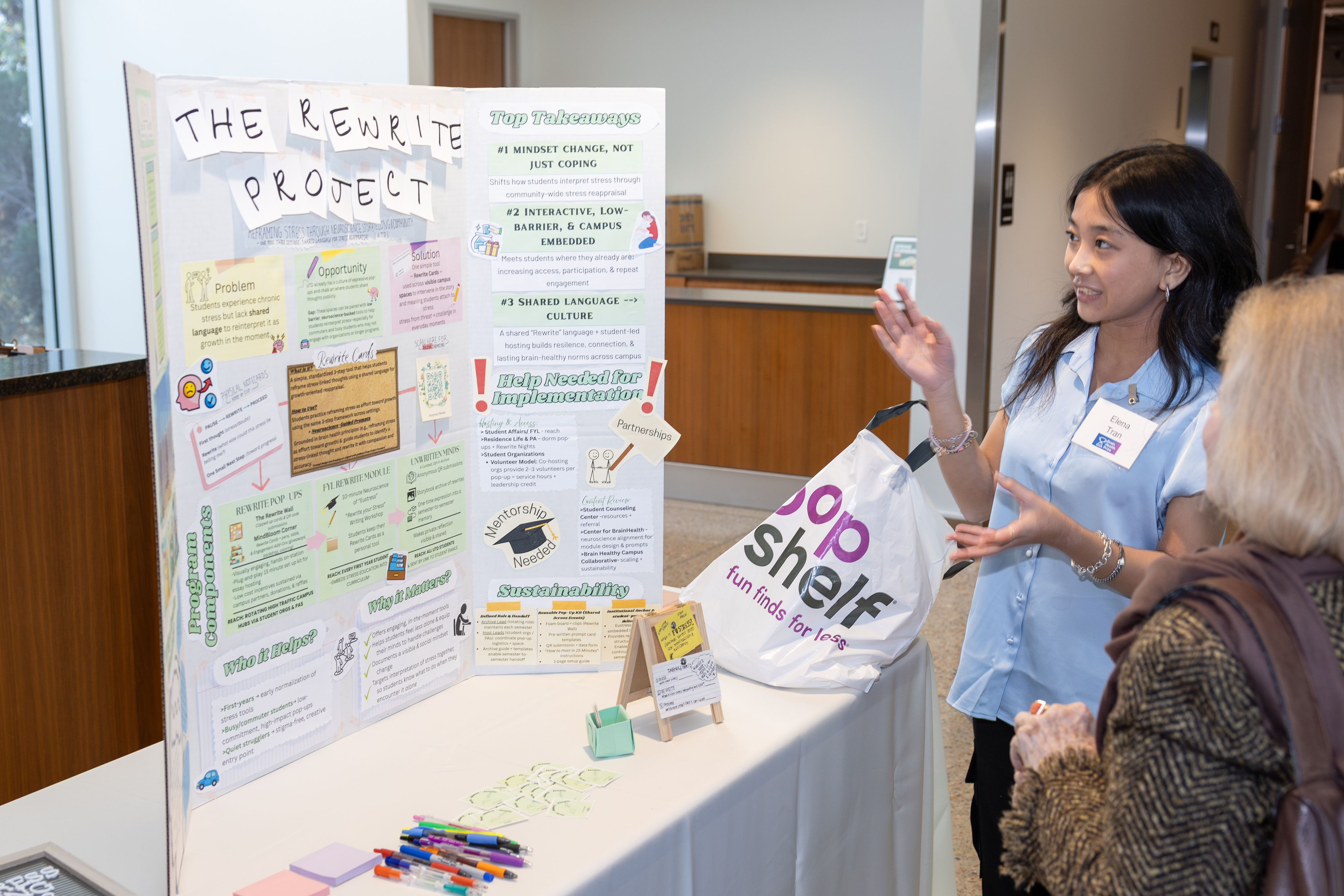
Elena Tran with The Rewrite Project

The Rewrite Project is a proposal to reframe stress by helping students reinterpret it as a performance-enhancing and growth-oriented experience. Through interactive Rewrite Wall pop-ups, reflection-based activities, and a Freshman Seminar module, the program integrates neuroscience-informed stress reappraisal into everyday campus life. Student stories are preserved in Unwritten Minds, a semesterly digital storybook that builds a living archive of resilience and belonging. By combining storytelling, psychology, and peer engagement, this student believes UTD can create a structured, sustainable system that shifts campus culture from stress reduction to stress reframing.

Watch the video here.
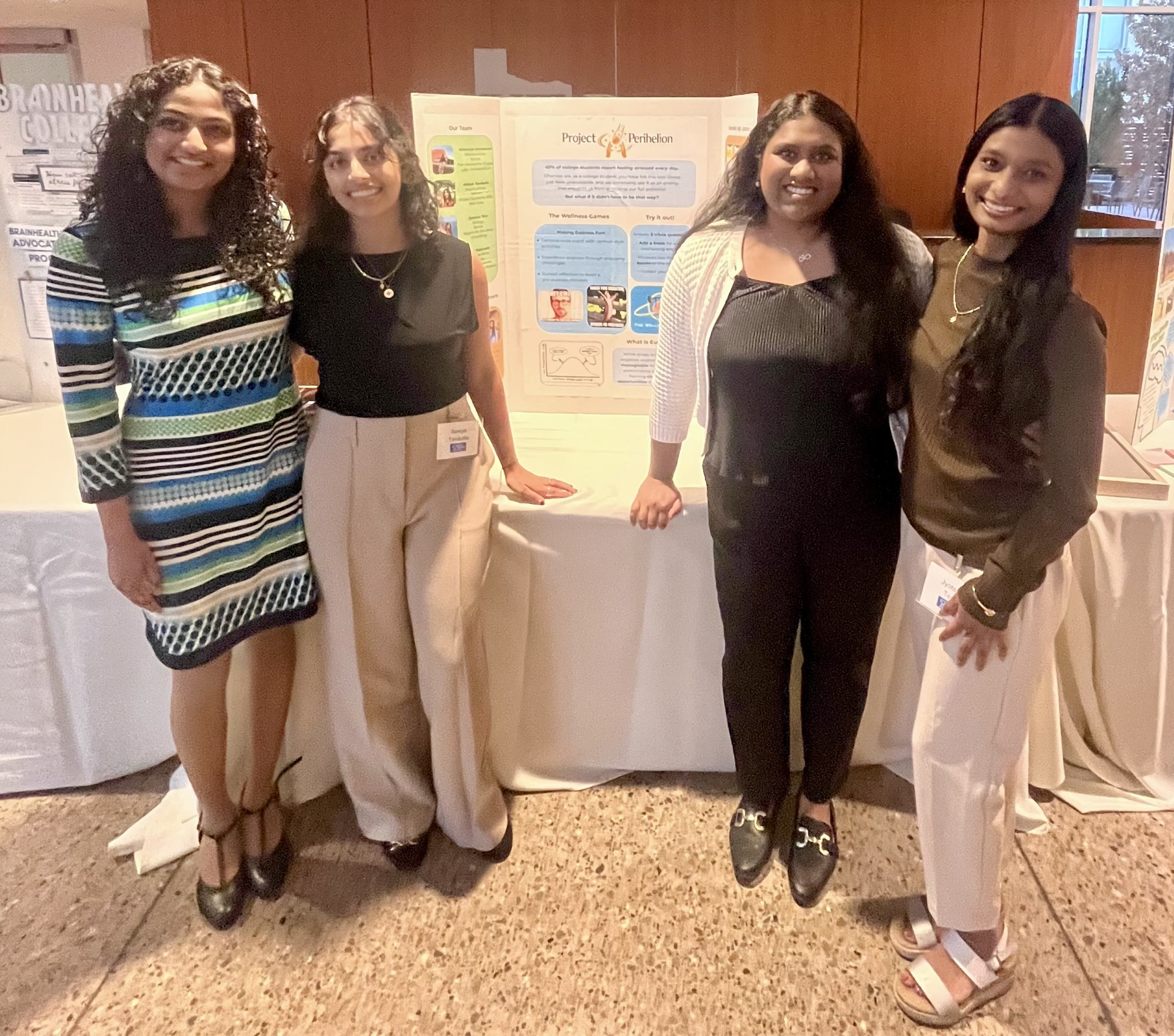
Alekya Tanikella, Aiswarya Saravanan, Isha Rojanala, Jyotsna Tera with Project Perihelion

Project Perihelion is a three-phase proposal that helps UTD students harness eustress, defined as positive, performance-enhancing stress, through daily practice, peer engagement, and interactive events. In Phase 1, the xponetiq app is enhanced with gamified Mini Quests, reflective journaling, and personalized “choose your own adventure” eustress storylines powered by a lightweight, rules-based AI system. Phase 2 builds a Eustress Coalition of student organizations that host workshops centered on goal-directed action, meaning, and positive self-talk. Phase 3 culminates in campus-wide Wellness Games that make learning about eustress hands-on, engaging and fun. Together, this team of four hopes to establish a campus-wide culture shift that helps students channel stress into growth and peak performance.

Watch the video here.
FINALISTS ↓

2026 Brain Health Prize Finalists 

The top 20 contenders for the BrainHealth Prize were invited to participate in a poster competition to showcase the gallery of innovative student ideas.

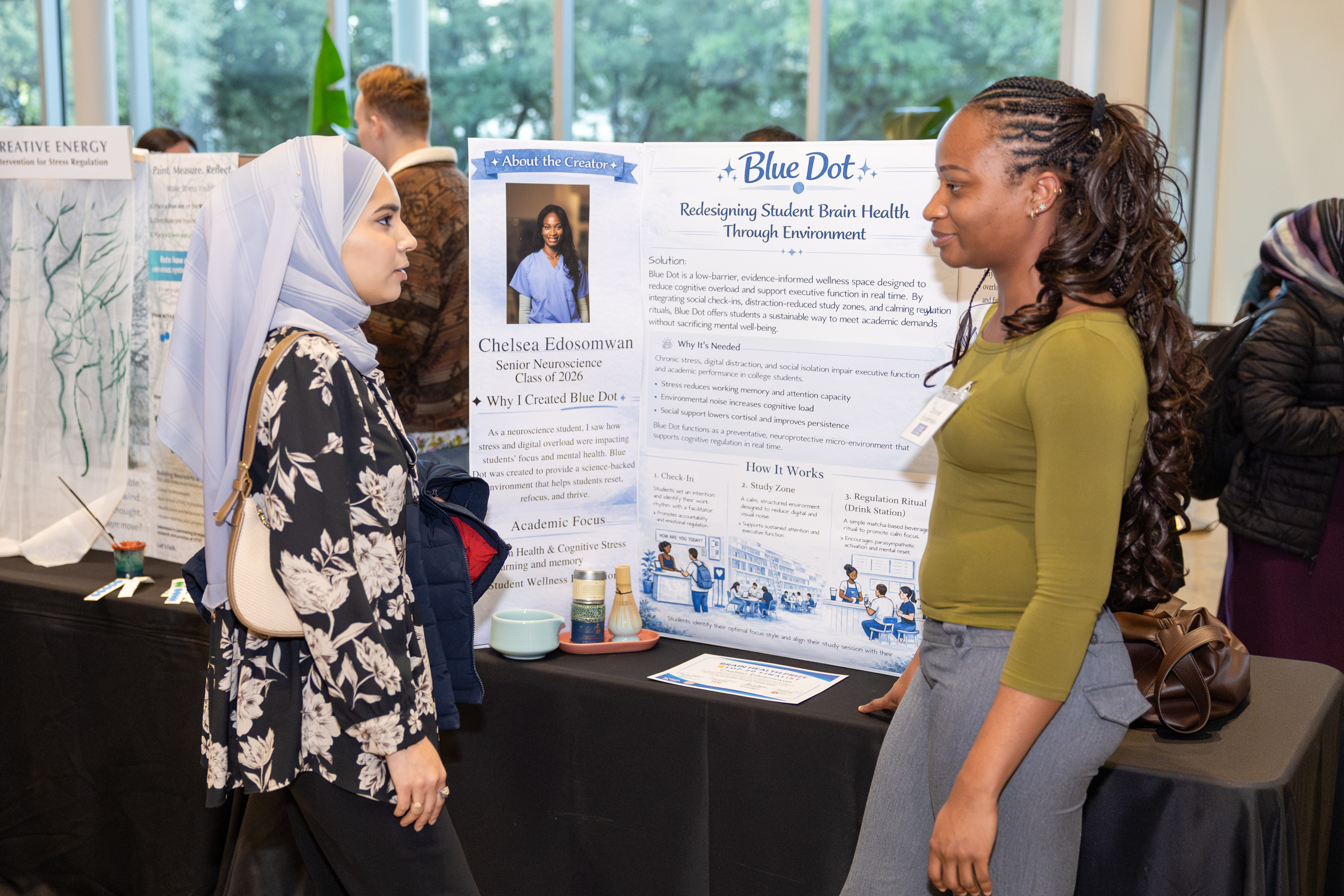
Chelsea Edosomwan with Blue Dot

Blue Dot proposes a campus “third space” designed to help students manage stress and focus more effectively. Through structured work cycles, goal-setting check-ins, and distraction-free environments, the pop-up space helps students shift from avoidance-driven stress to productive engagement.

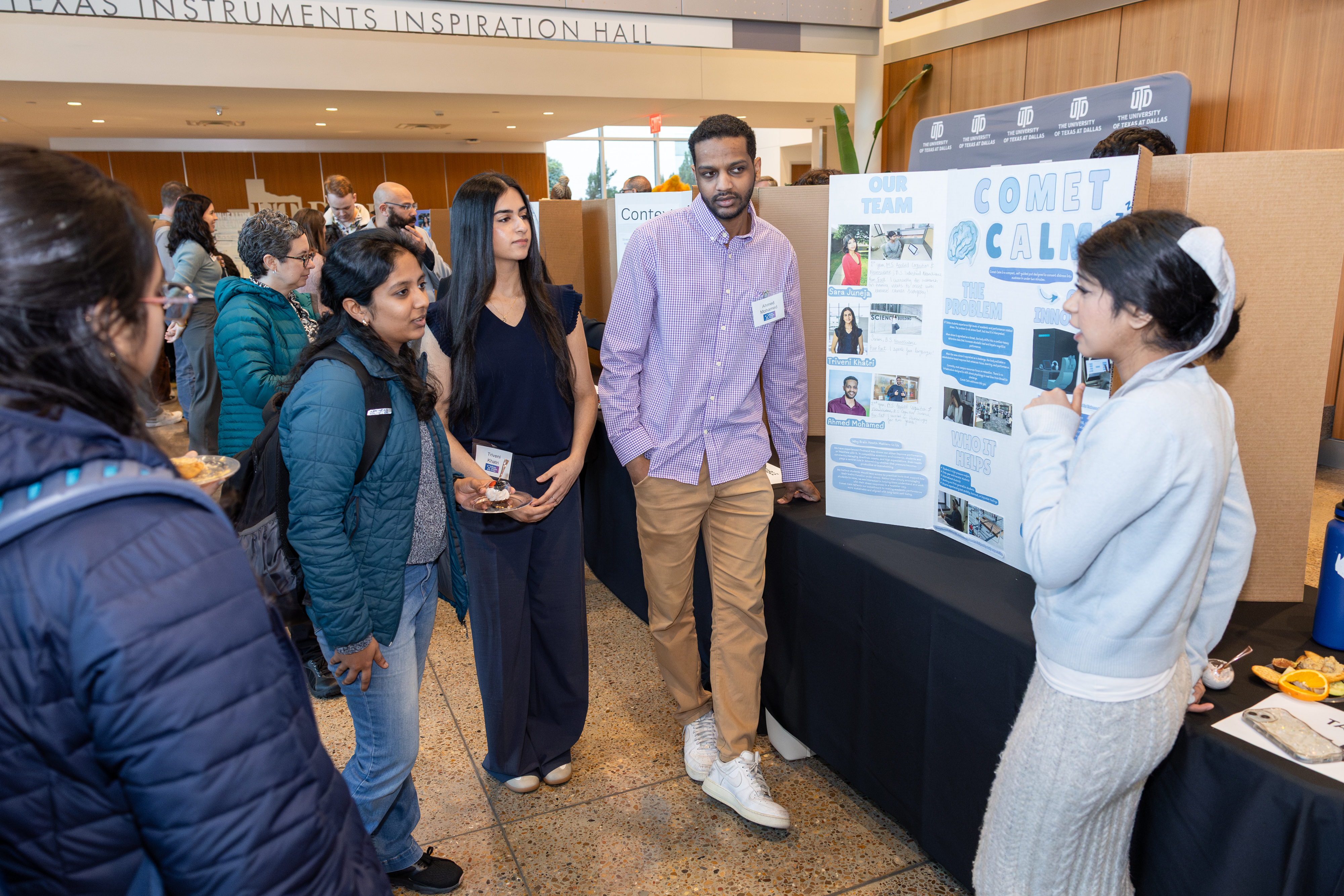
Triveni Khatri, Sara Juneja, & Ahmed Mohamed with Comet Calm

Comet Calm proposes small campus pods designed to help students quickly convert distress into productive, performance-enhancing stress. Through brief physiological readings, guided prompts, and short cognitive challenges, the pods help students reframe stressful situations as controllable challenges.

Wafiyah Wadud with CometsPEAK

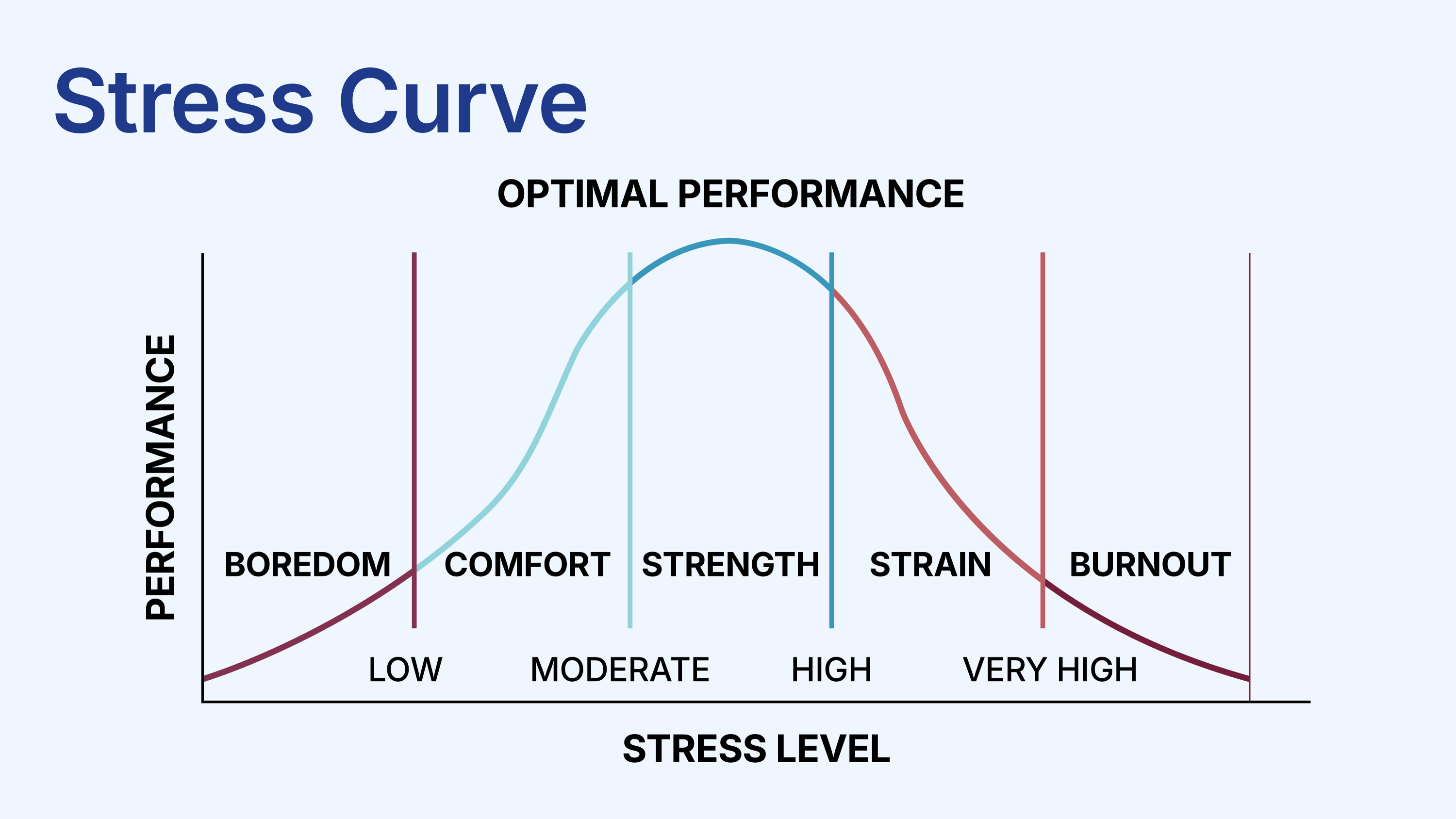
CometsPEAK proposes a toolkit built around the neuroscience principle that students perform best in an “optimal activation zone.” The program uses a color-coded deck of activity cards—Soothing, Boost, and Equilibrium—to help students regulate their stress levels and shift into a productive state for studying and learning. The toolkit can be paired with workshops, digital resources, and accountability partners to support healthy stress management across campus.

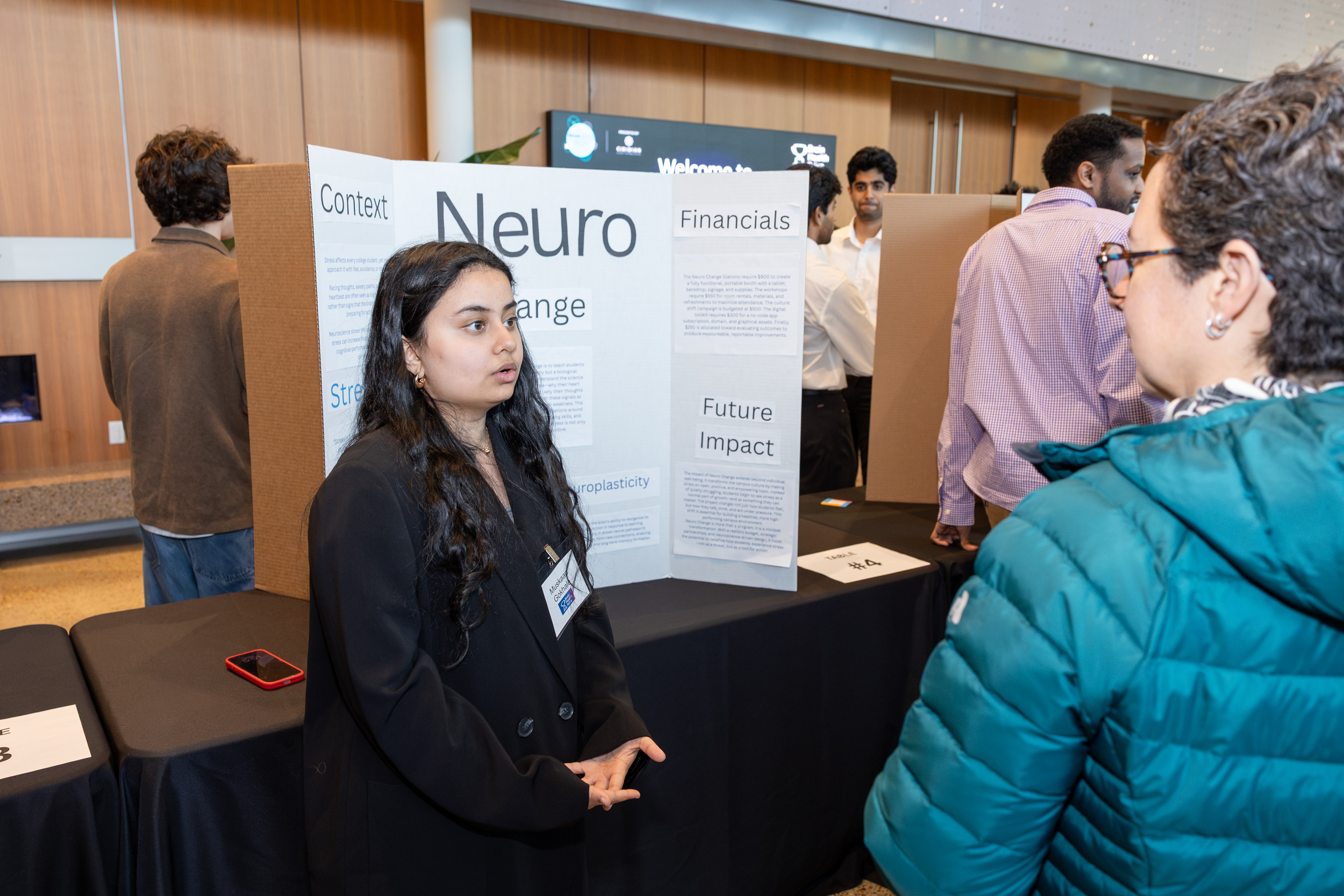
Muskaan Gokhale with Neuro Change

Neuro Change is a campus initiative designed to help students reinterpret stress as a resource for performance rather than a threat. The program combines pop-up “Reframe Booths,” hands-on workshops, and a digital toolkit to teach neuroscience-backed strategies for channeling stress into focus and action.

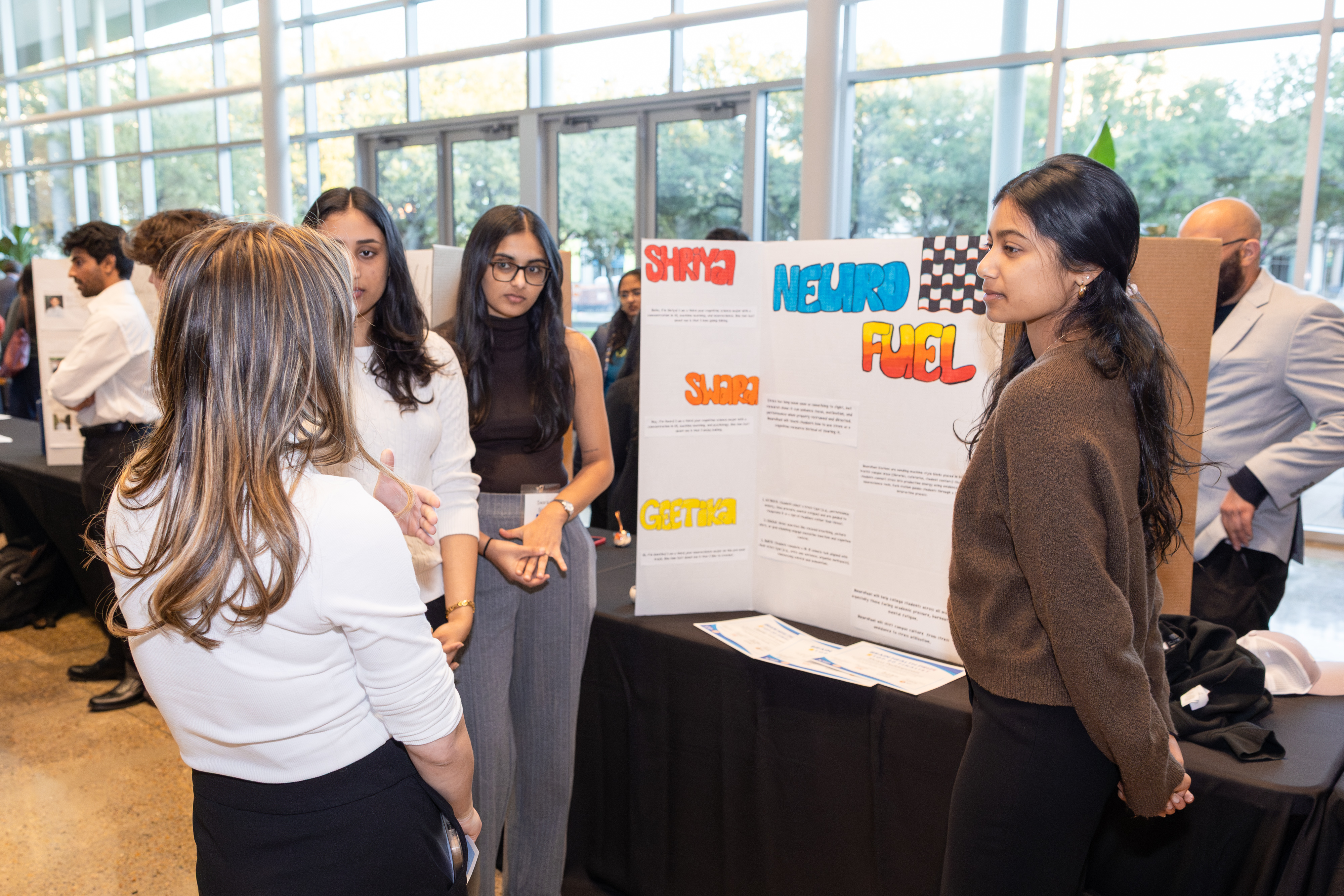
Shriya Peddapuram, Swara Saoji , & Geetika Vallurupalli with Neuro Fuel Stations

NeuroFuel proposes interactive campus kiosks where students can quickly transform stress into focused action. Through a short three-step process—identifying their stress, completing a brief science-based focus exercise, and tackling a small actionable task—students are guided to reframe stress and regain momentum. The stations would be placed in high-traffic campus areas and offer optional take-home “NeuroFuel Kits” with simple tools to support focus and stress management.

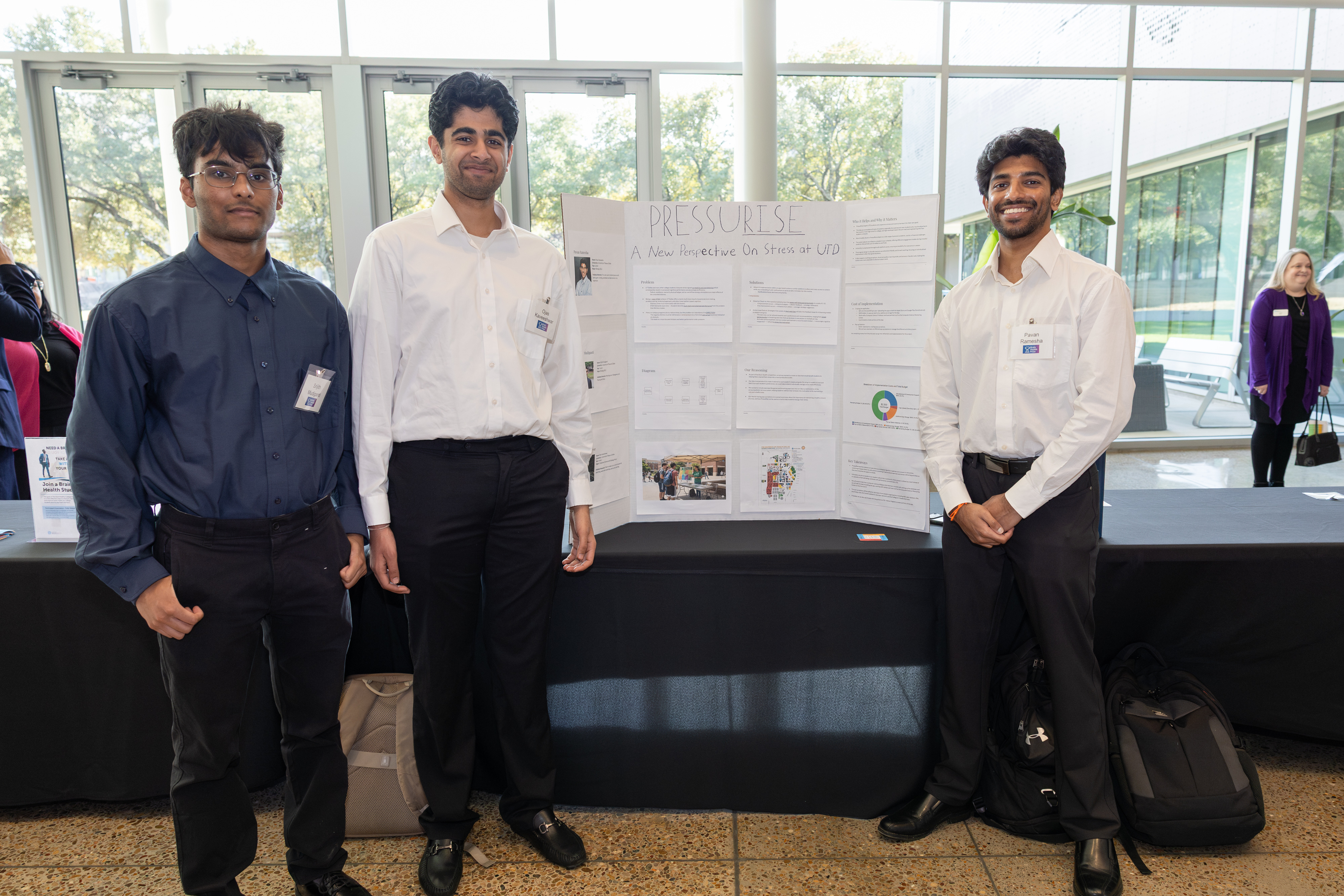
Srijith Mudiganti, Ojas Kaveeshwar, & Pavan Ramesha with PressuRise

PressuRise proposes a campus initiative that helps students reinterpret stress as a signal for action and performance rather than a threat. Through an AI-supported app with adaptive check-ins and pop-up “Stress Gyms,” the program guides students to channel moments of heightened stress into focused tasks and productive momentum.

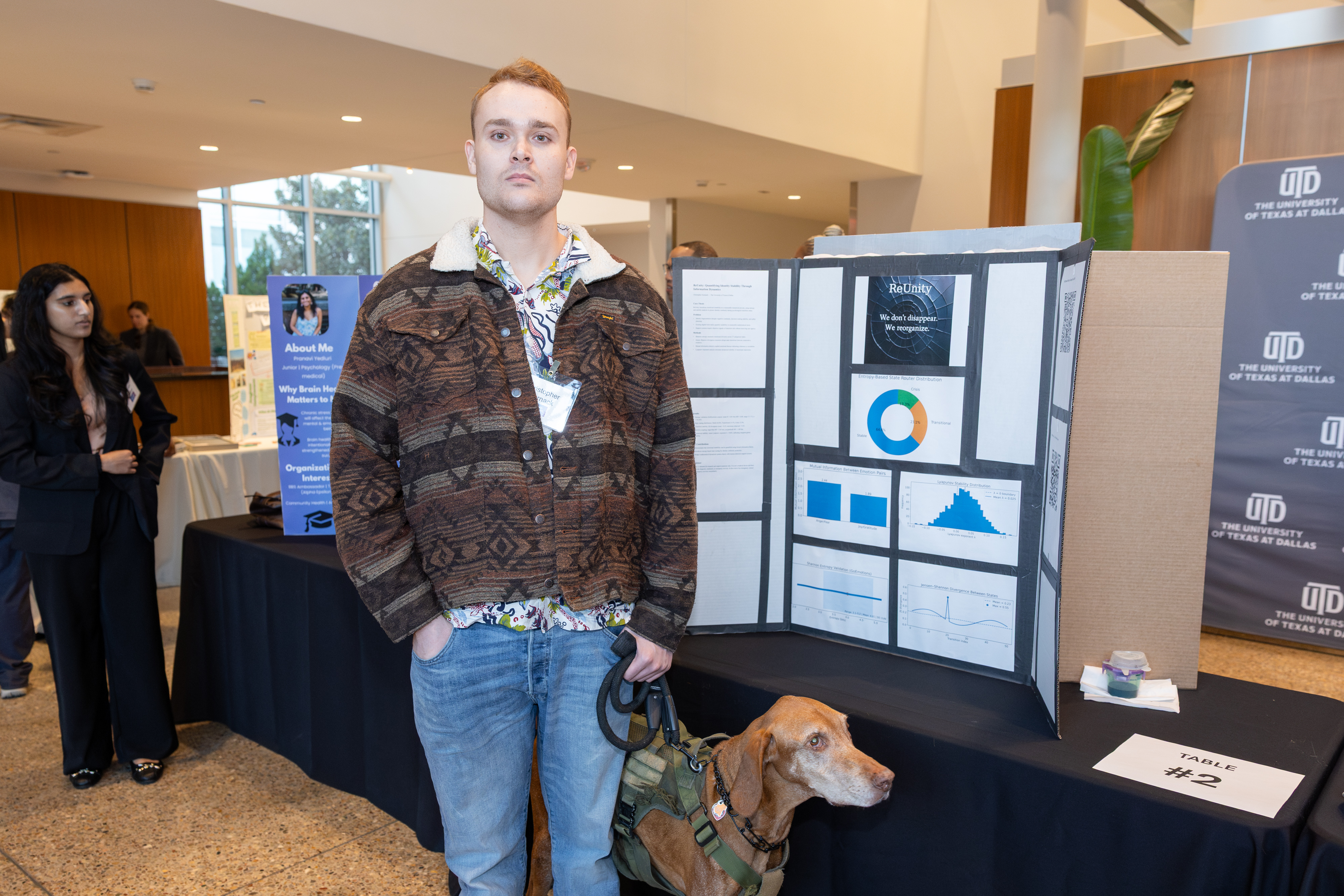
Christopher Ezernack with ReUnity

ReUnity is a framework that helps students transform stress into clarity and growth by recognizing early signs of overwhelm and guiding them through structured reflection and self-regulation. Drawing on concepts from neuroscience, physics, and information systems, the program treats stress as usable data that can be reorganized into productive patterns of thinking and action.

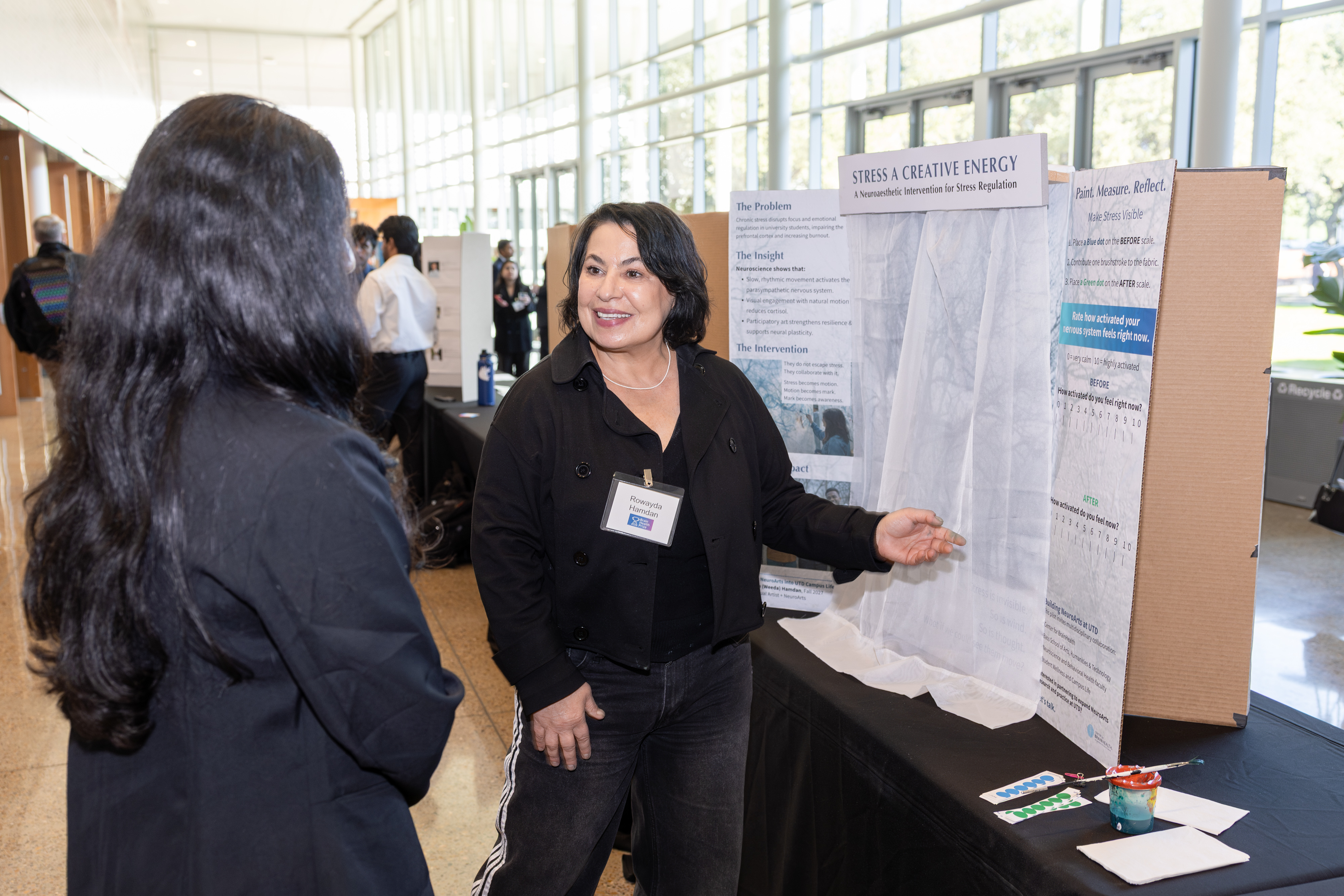
Rowayda Hamdan with Stress In Action

Stress in Action is an interactive outdoor installation that uses art and natural elements—wind, light, and movement—to help students reframe stress through creative expression. Students paint on suspended fabrics that shift with the environment, turning unpredictable patterns into collaborative artwork while engaging in mindful, neuroaesthetic experiences that promote reflection and emotional regulation.

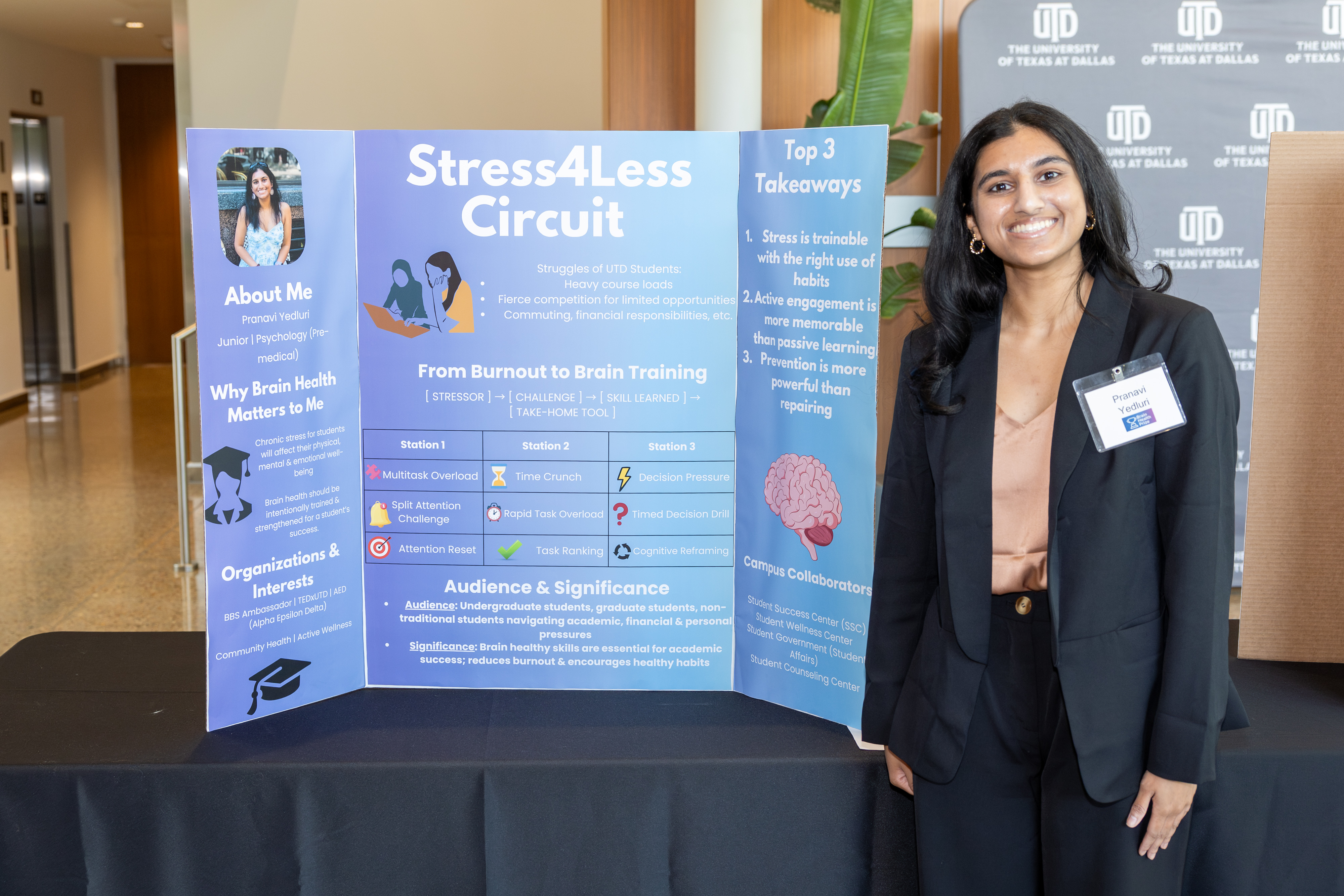
Pranavi Yedluri with Stress4Less

Stress4Less Circuit is an interactive, game-like campus experience where students move through a series of stations that simulate common academic stressors such as multitasking, deadlines, and cognitive overload. Through hands-on challenges and immediate feedback, participants learn practical strategies to manage stress and receive take-home tools and follow-up micro-challenges to reinforce these skills.

Garrett Smith with Goldilocks College Stress Management App

Goldilocks is a mobile app designed to help students manage stress by staying in the “Goldilocks Zone”—not too much stress and not too little. Using weekly stress assessments and daily check-ins, the app recommends short, brain-healthy activities to either increase motivation or reduce stress and connects students with campus resources and events based on their current stress level.

Inspired by what you see?

Apply for the Brain Health Prize in November 2026.

ALT TEXT